


 My Account
 Free Standard Delivery
 Fast Secure Payments
 International Shipping
 Trade Accounts Available
 Professional Paint Service Available
Are UK drivers shunning electric cars?
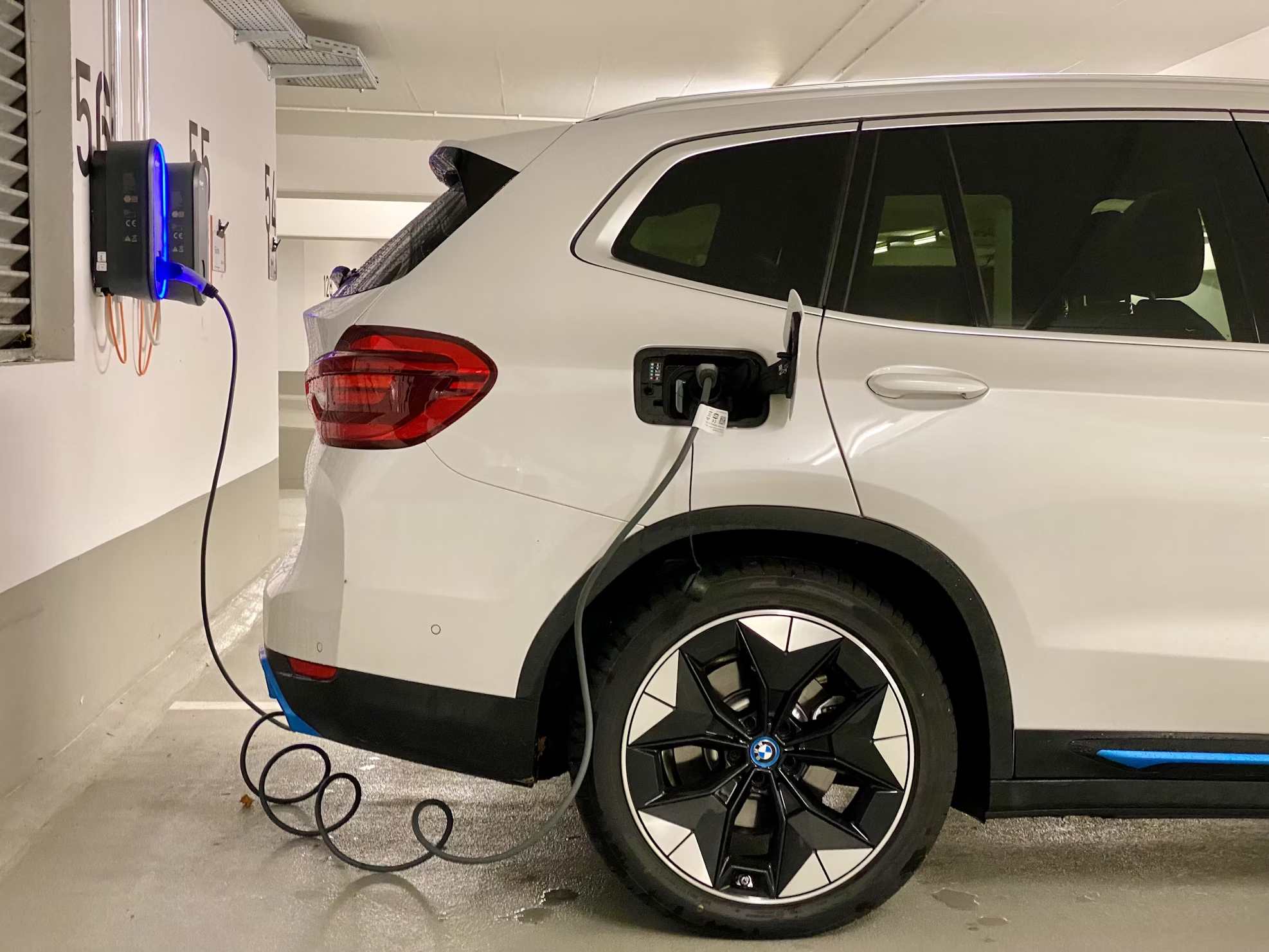
The road to significant adoption of electric cars in the UK looks to be paved with more potholes than the average A road in the UK at the moment.
There’s some evidence that not only do drivers not like electric cars (more on that later in this blog) but insurance companies are not exactly thrilled with them and second hand car dealers can’t figure out how to make money out of them.
Add to the mix that in various countries of the world drivers of electric cars are going to have to pay for every mile they drive. That’s about to be the case in California, although Texas has already brought in an extra registration fee. New South Wales in Australia is also planning a form of road pricing. How long will an incoming Labour government resist the temptation to tax further, in some form, electric cars just as all UK governments insist on picking the pockets of that cash cow called the UK motorist? The current Conservative government has already reneged on its promise not to charge road tax on electric cars!
The UK government, along with many others, is pushing for a greener future dominated by electric vehicles (EVs).
However, despite the environmental benefits, a significant portion of UK private drivers remain unconvinced.
Figures from the Society of Motor Manufacturers showed in January 2024 that only 14.7% of new cars sold were electric. Fleet buyers accounted for 63% of those new electric cars and only 35% of private buyers bought an electric car.
The UK Government has imposed a target on car manufacturers to sell 22% of new cars classed as electric with this figure rising to 80% by 2030.
These targets might explain why there aren’t usually any second hand (used) electric vehicles sitting on car forecourts in the UK as new car dealers know that they have to try to sell a new electric car in order to stand any chance of hitting these targets.
So, let’s look at some other reasons why car drivers in the UK are not exactly embracing electric vehicles. Here's a closer look at the various reasons why some drivers are hesitant to ditch their petrol or diesel cars for electric alternatives.
The Upfront Cost & Depreciation
Electric cars boast lower running costs, but the initial purchase price can be a major hurdle.
EVs tend to be significantly more expensive than their petrol or diesel counterparts.
It’s not uncommon to see electric vehicles such as Range Rovers retailing at more than £100,000.
Even ‘average’ family cars can be £35,000 or more - often way out of reach for most families.
This can be a dealbreaker for many private drivers, especially those who rely on budget-friendly vehicles.
Furthermore, there's a concern surrounding depreciation. While traditional wisdom suggests EVs hold their value better due to lower running costs, the technology is constantly evolving.
Early adopters worry that their EVs will become quickly outdated as battery range and charging speeds improve, leaving them with a depreciated asset.
We are already seeing that used car dealers don’t like electric vehicles as they don’t really understand them and can’t as easily make money from them. There have been anecdotal reports that some people are buying electric Range Rovers at £70,000 and having to sell them for £21,000.
Range Anxiety: Fear of Running on Empty (Electrons)
One of the biggest concerns for private drivers is "range anxiety" – the fear of running out of battery power before reaching a charging point.
How many drivers of electric cars would just set off on a long journey particularly if that journey ended or went through rural areas of the country - without considering the practicalities of where there might be electric charge points, never mind the time involved in stopping in order to recharge.
Let’s Play The Waiting Game
Even when a charging point is located, the charging time itself can be a significant deterrent.
Compared to the quick refuel at a filling station, charging an EV, especially with a standard charger, can take up to several hours.
This can disrupt daily routines and add significant time to long journeys. While rapid chargers are becoming more common, their availability and cost can still be a barrier.
A Network in Need of a Spark: The Charging Infrastructure
The lack of a robust charging infrastructure is another major concern.
While the number of charging points in the UK is growing, it's still far from ubiquitous.
This uneven distribution can leave drivers worried about finding a charge, especially in rural areas or during peak periods.
Additionally, the current infrastructure can be unreliable, with reports of malfunctioning chargers adding to the frustration.
The Impact of Battery Weight on Tyre Wear
Electric vehicles are significantly heavier than their petrol or diesel counterparts due to the weight of the battery pack.
This additional weight can put a strain on tyres, leading to increased wear and tear.
While some EV-specific tyres are being developed, they can be more expensive than standard tyres, adding to the overall running cost.
In a recent article in the Daily Telegraph car lover Jim Bassett managed a paltry 7,500 miles in his brand new Volkswagen ID.3 before being quoted more than £300 to replace a rear tyre.
The 80-year-old paid the money after being told it was the norm now for tyres on his rear-wheel model to degrade rapidly due to the weight of the vehicle.
The Environmental Impact of EV Production
While EVs are touted as environmentally friendly, the production process can be energy-intensive and have its own environmental impact.
The mining of materials for batteries has raised concerns about ethical sourcing and sustainability. There are widespread (unconfirmed) videos and reports of children being used to mine lithium and other minerals in Africa in order to supply the minerals required in electric car batteries.
According to one commentator on X, formerly Twitter, Dr. Sharnael Wolverton Sehon claims the following:
“With a Tesla model Y battery, it takes up all of the space under the passenger compartment of the car. To manufacture it, you need:
-12 tons of rock for lithium (can also be extracted from sea water)
- 5 tons of cobalt minerals (Most cobalt is made as a byproduct of processing copper and nickel ores. It is the most difficult and expensive material to obtain for a battery.) -- You need 3 tons of nickel ore and 12 tons of copper ore to make 5 tons of cobalt!
- You must move 250 tons of soil to obtain: 26.5 pounds of lithium, 30 pounds of nickel, 48.5 pounds of manganese, and 15 pounds of cobalt
- To manufacture the battery it also requires 441 pounds of aluminium, steel and/or plastic, and 112 pounds of graphite
- The Caterpillar 994A is used to move the earth to obtain the minerals needed for this battery.
- The Caterpillar consumes 264 gallons of diesel in 12 hours. The bulk of necessary minerals for manufacturing the batteries come from China or Africa.
- Much of the labour in Africa is done by children. When you buy an electric car, China profits most.
- The 2021 Tesla Model Y OEM battery (the cheapest Tesla battery) is currently for sale on the Internet for $4,999 not including shipping or installation.
- The battery weighs 1,000 pounds (you can imagine the shipping cost). The cost of Tesla batteries are: Model 3 -- $14,000+ (Car MSRP $38,990) Model Y -- $5,000–$5,500 (Car MSRP $47,740) Model S -- $13,000–$20,000 (Car MSRP $74,990) Model X -- $13,000+ (Car MSRP $79,990)
- It takes 7 years for an electric car to reach net-zero CO2. The life expectancy of the battery is 10 years (average).
- Only in the last 3 years, you do start to reduce your carbon footprint, but then the batteries must be replaced and you lose all gains made.”
I can’t prove or disprove those facts but even if some of them are accurate, it should give most net-zeroists and Just Stop Oil protesters pause for thought.
Adapting to a New Way of Driving
For some drivers, the transition to an EV goes beyond just the car.
EVs require a different driving style, with regenerative braking and a focus on maximising efficiency.
This can mean ‘an adjustment’ for drivers accustomed to petrol or diesel vehicles.
The Future of Electric: A Work in Progress
The technology behind EVs is constantly evolving, with improvements in battery range, charging speeds, and affordability.
However, the concerns mentioned above are valid considerations for UK private drivers in the current market.
As the technology matures and the infrastructure improves, these concerns may become less significant.
The Road Ahead: A Balanced Approach
The UK government has been offering incentives to encourage the adoption of EVs, such as grants for purchase and reductions in tax, particularly for businesses to move their vehicle fleets to electric.
However, again, some commentators have said that this has just encouraged companies to buy much higher priced vehicles simply to cut their tax bill.
However, when those businesses come to sell those cars, typically after 3, 4 or 5 years, they are being hit by huge depreciation.
It’s clear due to sales volumes of electric cars that more needs to be done to address the concerns of private drivers.
This includes continued investment in charging infrastructure, ensuring its reliability and affordability.
Additionally, there needs to be developments in how batteries are produced more sustainably if more drivers are going to make the switch to electric.
Our View
For what it’s worth, we don’t think that electric cars will be the dominant in the future. We think that a significant part of the car market will still be powered by fossil fuels with emerging technologies such as hydrogen becoming as important or more so than electric cars.
Even the CEO of Toyota has predicted that electric cars will only ever make up circa 30% of the car market in the future and surely he should know why!
-Ends-

